
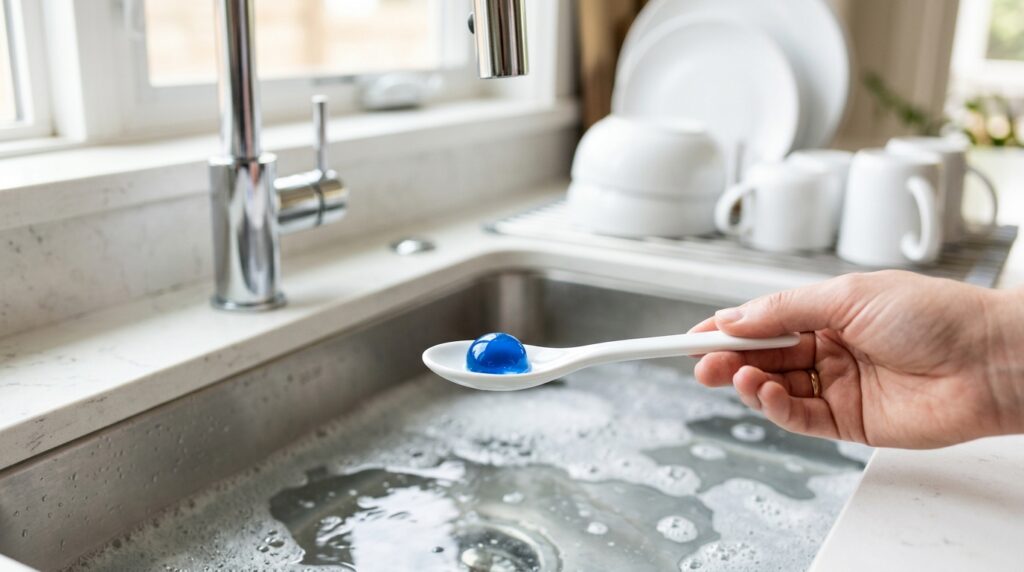
In commercial kitchens, hospitality prep areas, and high-volume foodservice environments, there is a chronic, costly habit: over-pouring dish liquid. Stewarding staff often dump half a cup of concentrated soap directly into a multi-compartment sink, operating under the assumption that a massive, towering mountain of white foam is the only way to get pots, pans, and cutlery pristinely clean.
For business procurement managers, hospitality directors, and wholesale chemical distributors, this reckless over-pouring isn’t just a messy kitchen habit—it’s a direct drain on corporate profitability. To optimize tight operational budgets and control chemical overhead, businesses must understand the math and materials science behind proper portioning.
Learning exactly how much dish soap should you use is the first step toward reclaiming your bottom line. Exploring high-efficiency chemical formulations can transform your overhead costs; discover how we design smart, cost-effective cleaning solutions at Boxy Klin.
Thickness vs. Active Matter: What Are You Actually Buying?
Many generic, low-tier commercial soaps confuse buyers through visual trickery. A common misconception among kitchen staff is that a thicker, slower-pouring liquid equals a stronger, more premium chemical. In reality, bargain-tier bulk brands often artificially manipulate their formulations using cheap sodium chloride (salt) or synthetic viscosity stabilizers to make a watery formula look thick.
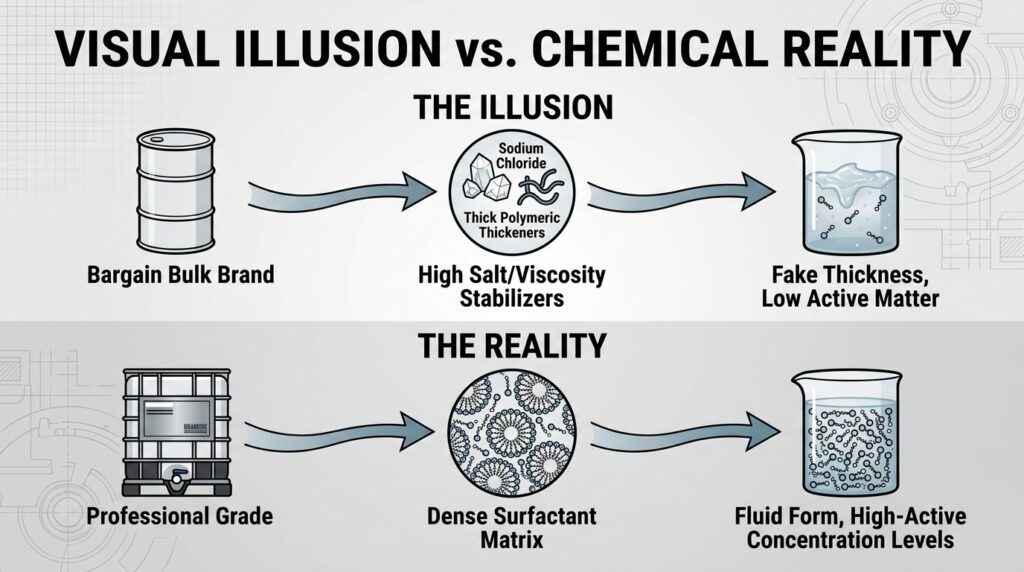
Contrast this with a professional-grade formulation that relies on high-tier chemical architecture. When a product features rich, high-active concentration levels (often a Total Active Matter percentage of 15% to 20%+), a tiny fraction of the product delivers massive cleaning results. Because the cleaning power comes from the density of the molecules rather than synthetic fillers, heavy pouring becomes completely unnecessary. Instructing staff on the correct dish soap dosage immediately stops money from being washed straight down the drain.
Stripping the Oils: How Modern Surfactants Work at Low Doses
To successfully train teams to reduce dish liquid waste, it helps to understand the molecular blueprint of grease degradation. A single drop of premium dish liquid is a highly organized collection of microscopic, double-sided surfactant molecules featuring a hydrophilic (water-loving) head and a lipophilic (oil-loving) tail.

When introduced to a wash sink, these molecules rapidly lower the surface tension of the water. The lipophilic tails immediately seek out fats, cooking oils, and animal lipids, locking onto them and pulling them away from stainless steel or ceramic surfaces. This process, known as micellar oil emulsification, traps grease into tiny, isolated droplets that remain suspended in the water column so they rinse away effortlessly.
Every formulation has a finite surfactant stripping capacity. Once the volume of water reaches its optimal oil-trapping micellar threshold, adding more raw soap does absolutely nothing to improve cleanliness. The excess soap cannot find any unbonded grease, meaning it floats uselessly in the water—wasting raw chemical materials and driving up your purchasing frequency.
The Institutional Guide: Mastering Bulk Dispensing and Dilution
For distributors and corporate procurement teams managing large-scale operations, the key to cost optimization is shifting away from direct-pour bottles and moving toward a structured, closed-loop dispensing system.
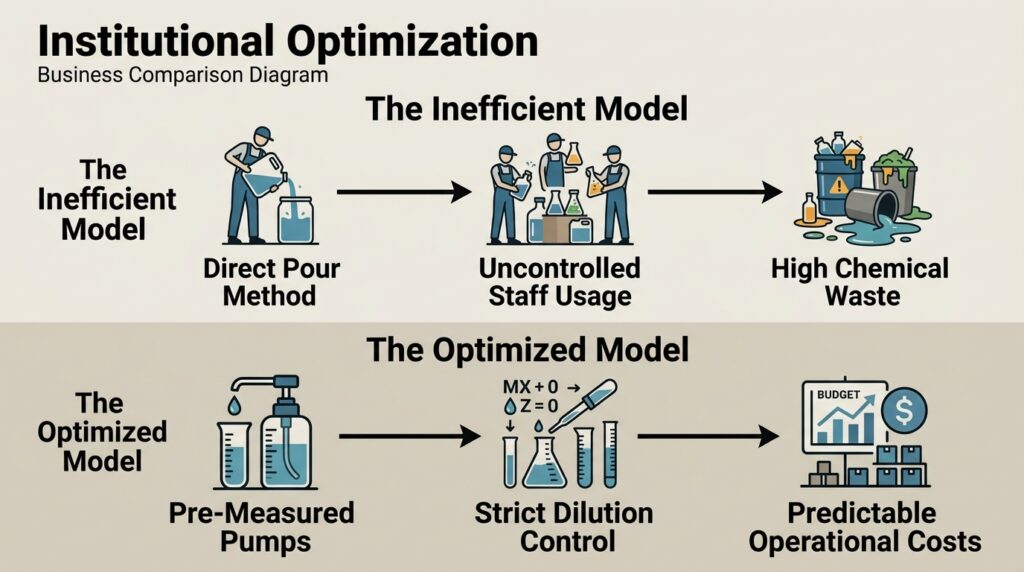
Implementing an efficient manual dishwashing guide relies heavily on establishing a precise bulk dish soap dilution ratio. For high-volume three-compartment sinks, the standard industry standard for a highly concentrated premium liquid is incredibly lean—often just 1 to 2 ounces of product per 10 gallons of water.
By installing simple, pre-measured push-pumps or automated venturi proportioners, you strip away human error and ensure staff use the exact milligram dosage required for the soil load. Furthermore, sourcing a highly concentrated product scales beautifully for logistics; a single commercial drum replaces dozens of watered-down consumer plastic bottles, drastically minimizing your shipping freight overhead and warehouse storage footprint. To view the technical datasheets, active matter percentages, and available packaging sizes for our entire industrial cleaning catalog, visit Boxy Klin.
Protecting the Infrastructure: Slashing Effluent Overhead
Beyond the immediate purchase cost of the chemical, over-sudsing introduces severe, hidden operational penalties to a commercial facility’s physical infrastructure.
When kitchen staff overload a sink with soap, clearing away the sticky, persistent foam requires double or triple the volume of rinse water. This unnecessary rinsing drives up municipal utility bills and strains hot water heating systems.
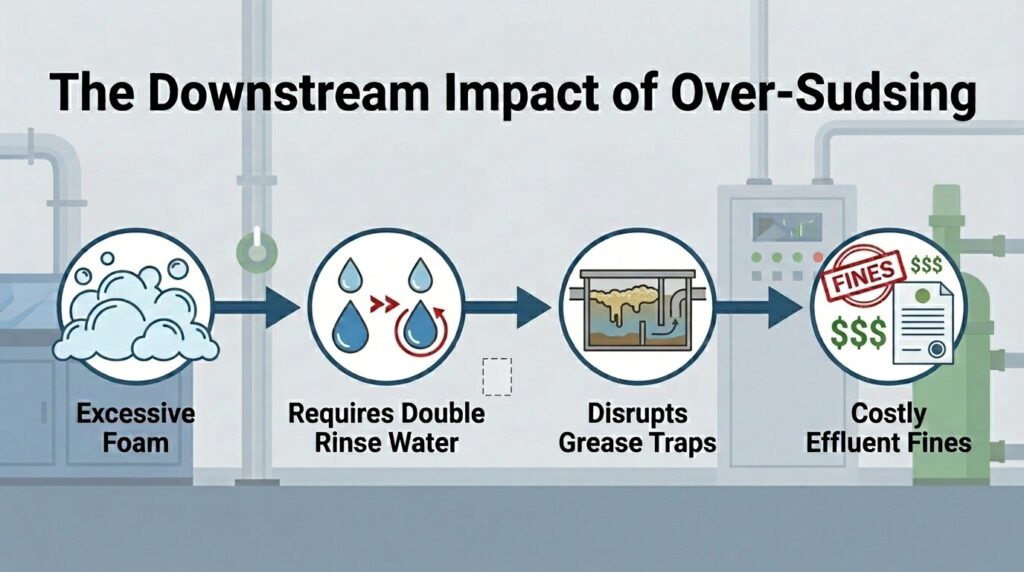
Furthermore, the post-wash drainage reality can be incredibly punishing to plumbing systems. Overloaded, surfactant-heavy drainage water enters corporate grease traps and commercial interceptors, disrupting the natural separation of fats and water. This poor effluent water management can lead to clogged sewer lines, backflows, and compliance failures with local municipal wastewater regulations. Implementing a disciplined, low-waste dosage system keeps corporate drainage lines running clearly and reduces the chemical processing footprint in regional waste facilities.
Driving Business Efficiency from the Sink Upward
Controlling how much dish soap your facility uses is far more than a simple kitchen habit—it is a vital corporate strategy. Minimizing chemical waste optimizes bulk shipping logistics, slashes water utility overhead, keeps commercial plumbing lines running smoothly, and extracts maximum performance from every single drop of your chemical inventory.
If you are a wholesale distributor looking to secure a highly resilient B2B supply chain, or a retail brand ready to develop your own high-efficiency private label line, reach out directly to our West Java manufacturing facility at Boxy Klin to request customized formulation samples and bulk pricing tiers.