
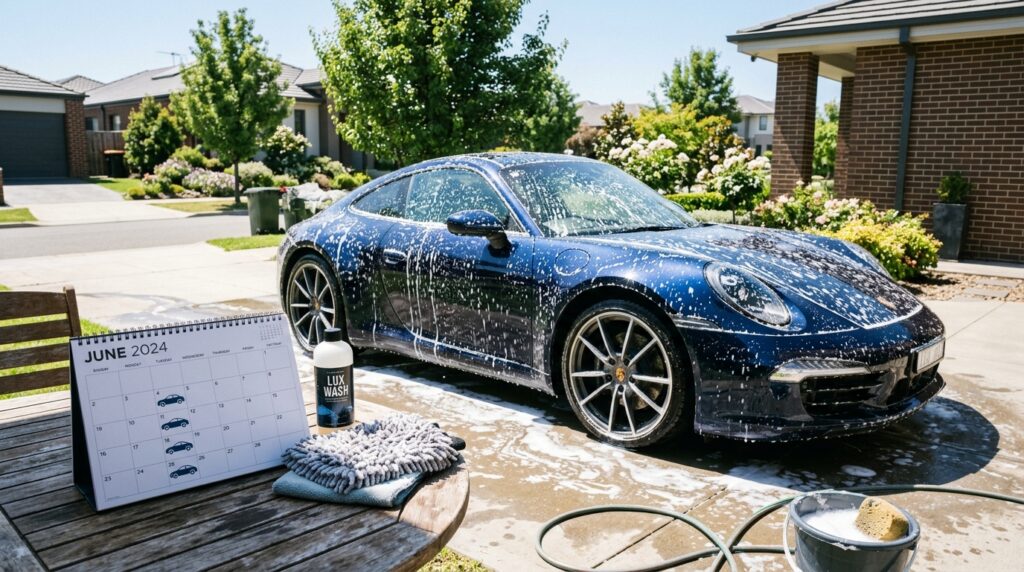
To the average driver, a car wash is purely cosmetic—something to cross off the chore list before a weekend road trip or when dust clouds the windows. From a chemical standpoint, however, waiting until a vehicle looks visibly filthy means waiting until environmental wear has already begun eating into the exterior finish.
For bulk chemical buyers, car wash networks, and automotive distributors, transforming this occasional consumer habit into a structured routine is the secret to converting slow-moving seasonal stock into a high-velocity asset. Understanding the scientific answer behind ideal cleaning intervals allows your procurement team to capture steady, recurring market demand.
Maximizing your business margins with high-performance automotive formulas designed for consistent use starts at the manufacturing source; explore our production capabilities at Boxy Klin.
Atmospheric Fallouts: The Invisible Hazards of Daily Driving
To build a compelling product argument for commercial buyers, we must analyze what happens to an automobile exterior when left unwashed in urban environments. It is not just mud and dust; vehicles face a constant rain of microscopic brake dust, exhaust carbon, sulfur dioxide, and industrial emissions.
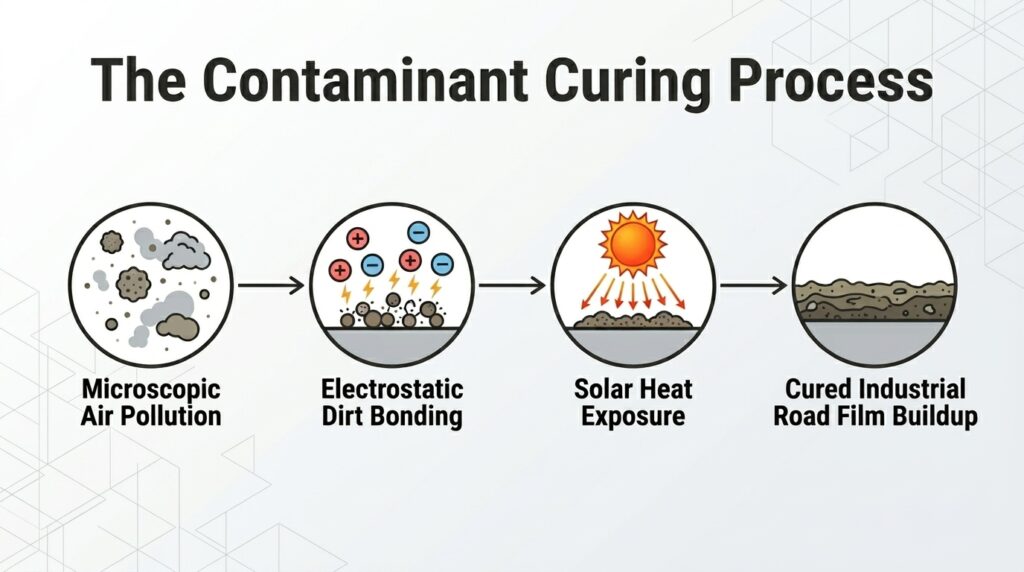
Vehicles naturally pick up fine contaminants that firmly clamp onto the exterior via electrostatic dirt bonding. The paint surface acts as a ground, pulling positively charged air particles down onto the clear coat.
If this aggressive industrial road film buildup is allowed to sit for weeks under hot sunlight, it cures into a sticky, hydrophobic layer that standard water spraying cannot budge. Over time, this baked-on film slowly dulls the topcoat gloss and traps micro-debris against the paintwork, making an educated best routine for washing car procedures highly necessary for asset preservation.
The 1-to-2 Week Standard: Finding the Perfect Maintenance Interval
Under normal driving conditions, answering how often should you wash your car with shampoo points to a precise technical window: washing a vehicle every one to two weeks with a high-lubricity formula represents the absolute ideal maintenance standard.
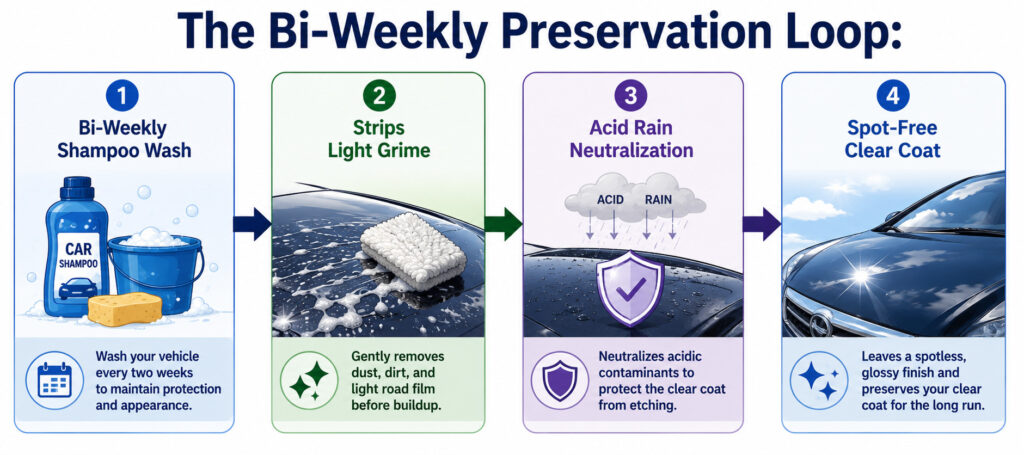
Adhering to a strict car wash frequency guide delivers definitive benefits of frequent car shampooing. A bi-weekly wash safely strips away light road dust and organic soils before they can convert into an abrasive sanding sheet under a wash mitt.
Furthermore, regular cleaning is vital for rapid acid rain neutralization. When polluted rainwater evaporates on a vehicle, it leaves behind concentrated nitric and sulfuric acid rings. Washing the panels with a premium shampoo neutralizes these chemical drops before they can permanently etch unsightly mineral spots into the paint glaze.
Protecting the Protectant: How Consistent Washing Extends Coating Lifespans
A massive misconception exists among retail buyers and fleet managers who believe that vehicles treated with ceramic coatings or polymer waxes do not require regular shampoo cleanings. This operational error actually accelerates the degradation of the finish.

Routine maintenance washing is critical for achieving total hydrophobic coating preservation. While ceramic sealants repel water, they still pick up a flat layer of sticky road oils. This oil slick masks the underlying coating, destroying its water-beading performance.
Regular shampooing gently lifts this grease layer away, reviving the slick surface and protecting the underlying sacrificial wax layer from being worn away prematurely by grinding road dirt. To examine our laboratory performance metrics, pH-balance stability sheets, and variable packaging sizes designed for global automotive markets, browse our professional catalog at Boxy Klin.
Sourcing for High-Frequency Use: Formulating Against Paint Stripping
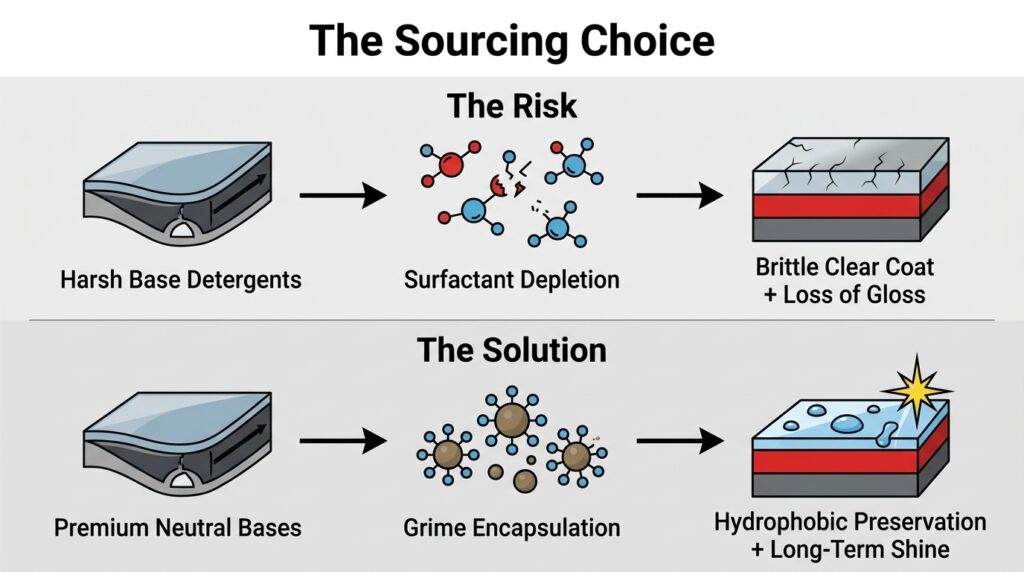
For procurement officers and wholesale managers, a critical technical warning must be calculated: high-frequency washing with poorly formulated, low-cost detergents is dangerous to an automotive inventory. Cheap soaps rely on harsh raw bases that introduce severe paint stress.
| Formulation Profile | Low-Cost Commodity Soap | Premium High-Frequency Shampoo |
| Active Matter Stability | Uncalibrated, high alkalinity bases | Strictly pH-neutral, mild surfactant matrices |
| Clear Coat Impact | Aggressive surfactant depletion | Complete lubrication panel glide protection |
| Long-Term Visuals | Brittle clear coat, accelerated color fading | Restores hydrophobic action, preserves gloss |
Overuse of uncalibrated, highly alkaline detergents leads to rapid surfactant depletion of the paint’s essential protective elements. These harsh fluids strip away the plasticizers within the clear coat, accelerating brittleness, clear-coat peeling, and color fading. The modern detailing market demands premium, mild, and highly stable shampoo bases designed explicitly for safe, high-frequency washing cycles.
Capitalizing on the Routine Cleaning Cycle with Boxy Klin
To safely counteract industrial road film buildup and break the grip of electrostatic dirt bonding, a vehicle demands a systematic wash every 1 to 2 weeks. Adhering to this routine ensures effective acid rain neutralization while driving superior hydrophobic coating preservation over years of exposure.
For international distributors, bulk wholesalers, and private label brands, educating your network on a proper maintenance routine isn’t just a value-added service—it’s an exceptionally smart business model that locks in high-volume, repeat chemical consumption. At Boxy Klin, we manufacture export-grade, high-foaming car shampoos that deliver elite surface care with every single wash.
Connect with our contract manufacturing team in West Java directly at Boxy Klin to secure tailored formulas, bulk wholesale rates, or ocean freight coordinates through Tanjung Priok Port.