
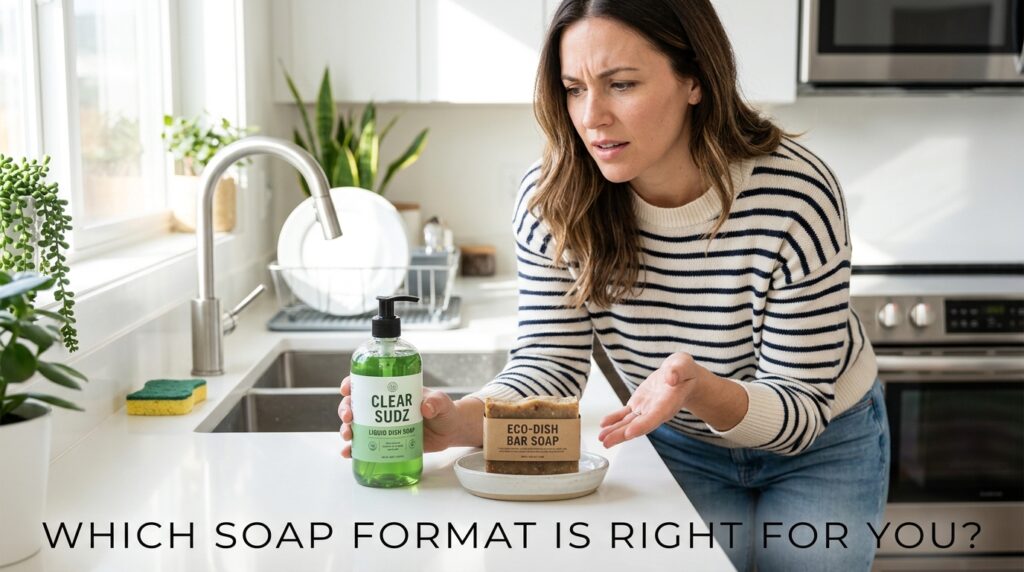
Walk down the home care aisle or browse an industrial cleaning catalog today, and you will notice that the classic plastic squeeze bottle is no longer the only option on the shelf. Solid cleansing blocks are making a massive comeback.
This structural shift has left many retail category managers and commercial inventory buyers facing product format confusion. Deciding on the right balance of bar vs liquid dish soap isn’t just about consumer preference—it directly affects your shipping weights, shelf space optimization, and alignment with corporate sustainability mandates. Choosing the right dish soap format allows distributors to capture both traditional households and fast-growing, eco friendly dish soap commercial markets.
Sourcing highly profitable, adaptable cleaning products in both solid and liquid formats begins with partnering with an agile manufacturer; explore our full-scale private label manufacturing capabilities at Boxy Klin.
Analyzing Traditional Liquid Dishwashing Liquid for Mass Demands
Traditional liquid soap remains an industry staple for good reason. Liquid formulations offer unmatched ease of use, instant dissolution in water, and rapid dispensing for high-volume commercial kitchens where speed is a core operational metric.
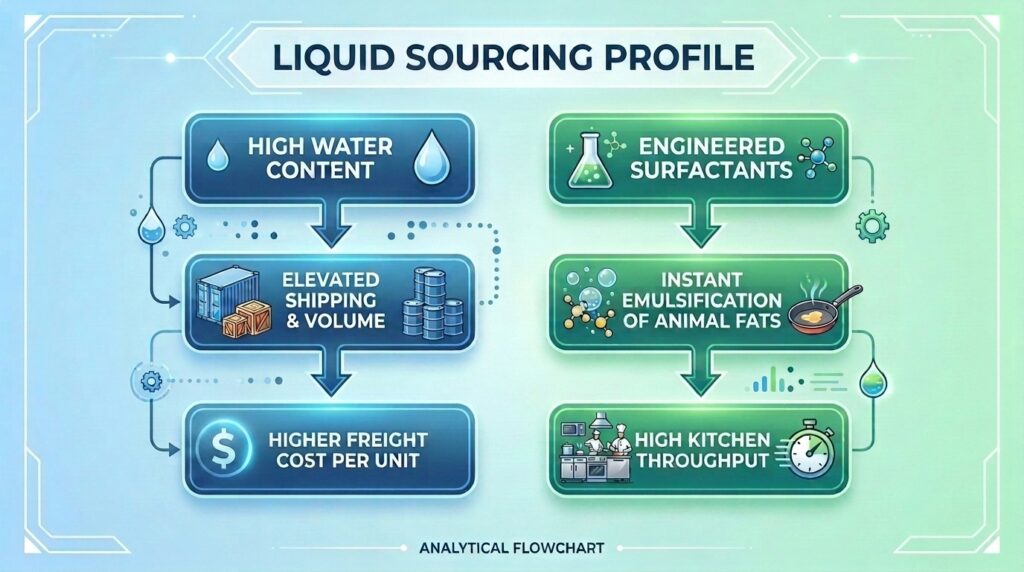
A premium liquid dishwashing liquid relies on highly engineered, synthetic or plant-derived dish soap surfactants. These chemical agents lower water surface tension instantly, allowing kitchen staff to rapidly emulsify heavy oils and stubborn animal fats.
However, a key factor in a dish soap comparison is that liquid soap inherently contains a large percentage of water. This composition increases shipping weight and volume for international export logistics, translating to higher freight costs per active cleaning unit.
The Solid Advantage: Unlocking the Solid Dish Soap Benefits
Solid dish soap blocks are not just a passing eco-trend; they represent an incredibly efficient, waterless alternative for commercial logistics.

The core solid dish soap benefits focus heavily on its identity as a truly concentrated formula. By eliminating water from the manufacturing stage, you drastically reduce product volume and weight. This allows wholesalers to pack significantly more washing power into a single shipping container, maximizing ocean freight efficiency.
The chemistry behind premium solid blocks often utilizes traditional saponified oils (such as coconut or palm oil reacted with an alkali). This chemical process creates a dense, long-lasting bar that cuts grease cleanly without needing rigid plastic containment.
Sustainability Metrics: Sourcing for the Zero Waste Kitchen
Modern hospitality groups, like luxury eco-resorts, and green retail chains demand hard data when auditing their suppliers. The packaging footprint is where the two formats diverge the most.
Solid bars allow brands to achieve a completely zero waste kitchen profile by utilizing plastic free packaging like biodegradable paper wrap or minimalist cardboard boxes.
| Sourcing Metric | Liquid Dishwashing Liquid | Solid Dish Soap Bar |
| Active Mechanics | Liquid dish soap surfactants | Concentrated saponified oils |
| Packaging Material | HDPE / PET recyclable plastic bottles | 100% plastic free packaging |
| Logistical Density | Moderate (water weight included) | Maximum (compact, dry weight) |
| Formulation State | Diluted fluid base | Highly concentrated formula |
| Runoff Profile | Biodegradable ingredients | Low-impact organic salts |
Liquid soap still holds a strong place in green procurement if formulated correctly. Choosing a liquid formula built with 100% biodegradable ingredients ensures that graywater runoff complies with rigid wastewater safety rules. This provides a clean-label alternative that contributes to industrial water conservation goals by rinsing clean with significantly less water volume.
To review our complete packaging structural options, third-party chemical safety data sheets, and bulk volume discount structures for export, browse our comprehensive product portfolio at Boxy Klin.
Market Segmentation: Optimizing Your Sourcing Portfolio for Maximum Turnover
You do not have to choose just one format; the most profitable B2B strategy is a segmented inventory approach that captures both consumer behaviors.

- Mass Volume Sourcing: Target industrial catering, large restaurant chains, and traditional supermarket shelves with a highly concentrated liquid detergent to feed automated or high-speed hand-washing workflows.
- Premium Niche Sourcing: Capture the high-margin boutique market—such as luxury eco-hotels, organic specialty shops, and zero-waste lifestyle brands—by introducing a private-label solid dish block line that proudly showcases its plastic-free credentials.
Future-Proofing Home and Institutional Care with Boxy Klin Sourcing
When evaluating bar vs liquid dish soap, the ideal choice depends entirely on your target audience’s operational goals. Traditional liquids offer unmatched speed using advanced surfactants, while solid blocks champion the eco-retail movement by packing a highly concentrated formula of saponified oils into plastic-free housings to maximize water conservation.
At Boxy Klin, we eliminate format confusion by manufacturing world-class private-label dish soaps in both liquid and solid configurations, tailored precisely to your brand’s performance and sustainability targets. Whether you are seeking high-volume liquid concentrates for regional industrial distribution or launching a premium, zero-waste solid bar line for international export markets, our West Java manufacturing facility provides complete chemical engineering and flexible OEM packaging.
Connect with our international trade and formulation specialists at Boxy Klin to secure custom product samples, review container optimization plans, or receive wholesale pricing tiers.