

In the fast-paced world of commercial procurement, the lowest per-liter price on a sourcing spreadsheet can be incredibly tempting. On paper, it looks like an instant victory for the quarterly operational budget. However, experienced procurement managers, hotel food and beverage directors, and consumer goods distributors know that bargain-tier chemical soap frequently hides a costly operational secret: it is mostly water.
If your kitchen staff or end-users have to pour three times as much product to clean the same volume of greasy pots and pans, that “cheap” soap has just tripled your actual usage cost.
Understanding the technical data and chemical engineering behind product performance helps business buyers see exactly how premium formulations pay for themselves on the wash floor. Shifting your business from a low-bid mentality to true, high-yield operational efficiency begins at the manufacturing source; explore our production philosophy at Boxy Klin.
Beyond the Water: The Power of Active Surfactant Payloads
When evaluating bulk chemical contracts, procurement officers must look past the visual thickness of the liquid and evaluate what they are actually buying: the raw cleaning chemistry, not the water filler.
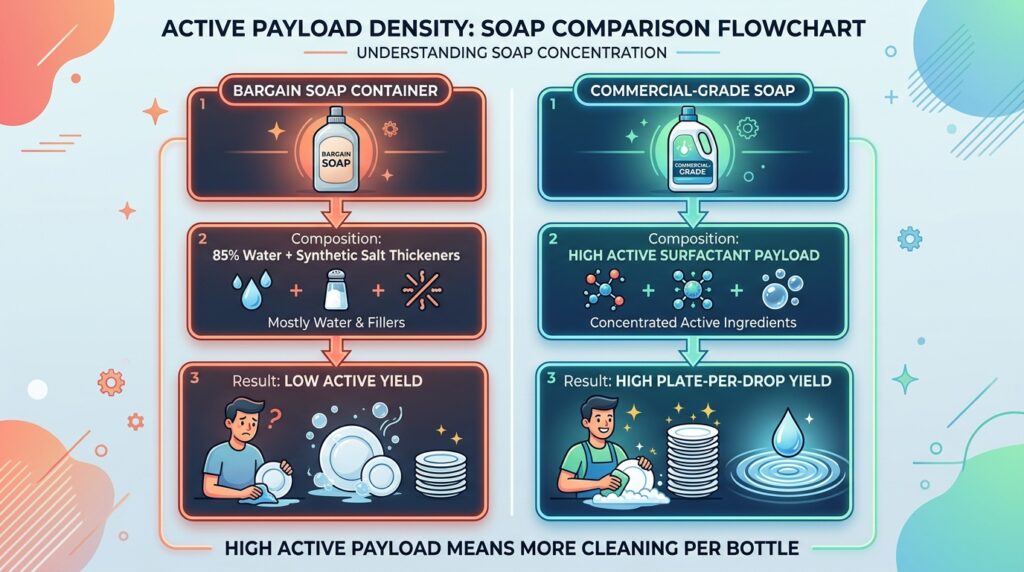
What makes quality dish soap worth the price is its dense active surfactant payload. Premium, commercial-grade liquids are formulated with a highly concentrated matrix of primary and secondary cleaning agents. This high density allows a tiny dose of concentrate to instantly reduce water surface tension, break the molecular bonds holding food waste to ceramic or stainless steel, and yield significantly more clean plates per batch.
Achieving this fluid performance without relying on cheap sodium chloride (salt) thickeners requires advanced viscosity engineering. This ensures the liquid pours predictably and dissolves smoothly in cold or hot water, avoiding the wasteful clumping common in low-tier brands.
Chemical Stability Under Pressure: The Science of High Dilution
A major operational failure point for cheap soaps occurs the moment they hit a large, multi-compartment commercial sink system. Weak soaps break down and lose their sudsing structure almost immediately upon contact with heavy grease, requiring staff to constantly dump the water, scrub the basin, and refill the sink.
A quality formulation avoids this labor bottleneck by utilizing synergistic surfactant systems. By blending complementary types of linear alkylbenzene sulfonates, alcohol ethoxylates, and amphoteric betaines, the formula achieves superior chemical stability under heavy organic loads.
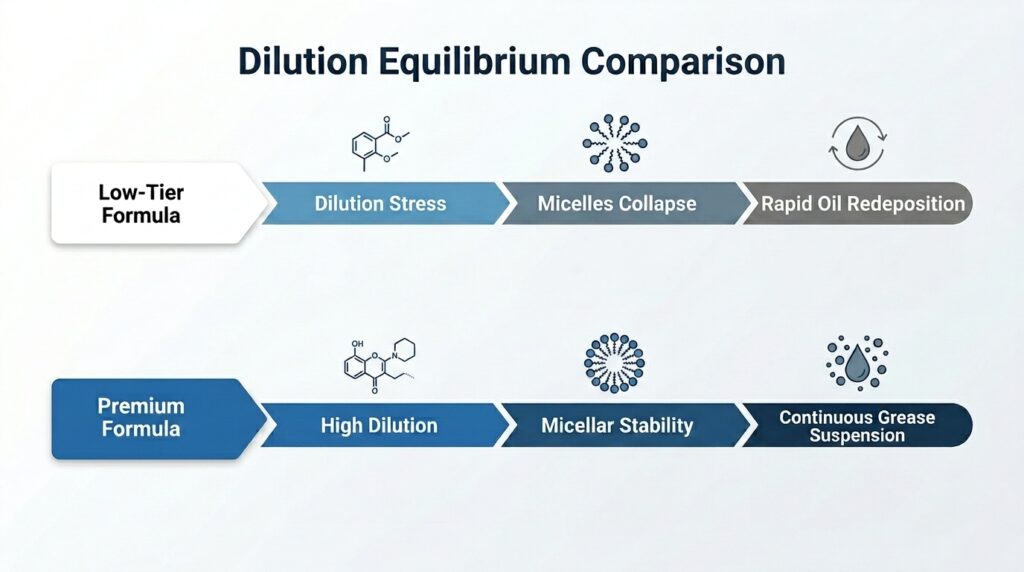
This precise chemical blending guarantees exceptional micellar stability under dilution. Even when mixed with hundreds of parts of water in a deep industrial basin, the microscopic cleaning spheres remain perfectly active. They continuously encapsulate, trap, and hold heavy oils in suspension, preventing grease from redepositing onto clean tableware and allowing a single sink load to last through an entire kitchen shift. This extreme longevity showcases the core high concentration cleaning product advantages that high-volume buyers look for.
Protecting Your Most Valuable Asset: Dermatological Safety in High-Volume Washing
A hidden operational cost that procurement managers often overlook in their financial spreadsheets is employee turnover and lost productivity due to occupational skin damage.
Harsh, cheaply built industrial dish soaps rely on aggressive, unbuffered synthetic detergents that strip the natural oils completely out of workers’ hands. This leads to raw skin, chemical cracking, and painful dermatitis, which slows down washing speeds and damages kitchen morale.
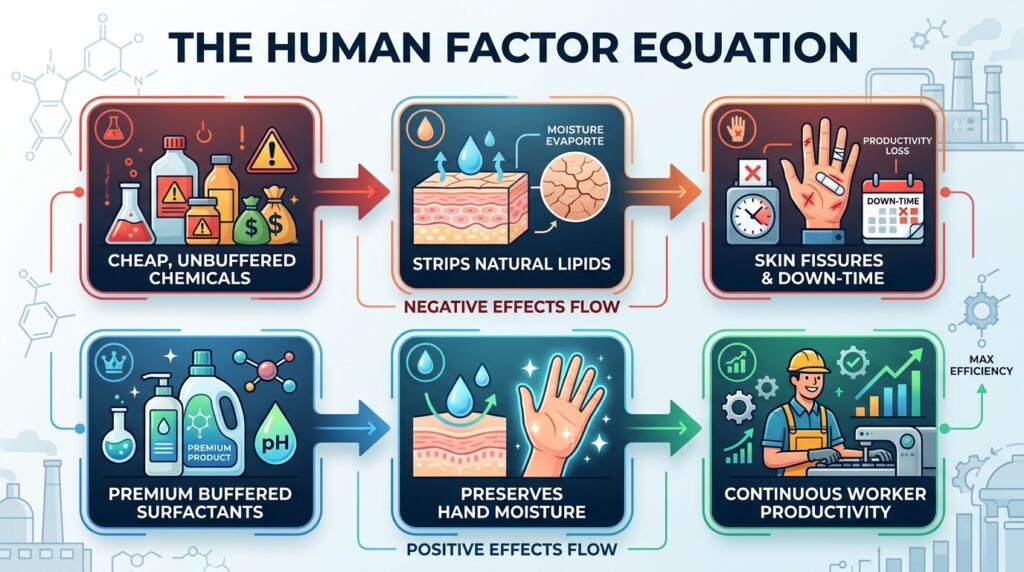
The true value proposition of premium dish soap balances raw grease-cutting power with rigorous skin safety benchmarks. A high-tier formula incorporates specialized conditioning agents to provide robust emollient barrier protection. These ingredients ensure that while the soap aggressively targets and emulsifies polymerized fats on pots and pans, it preserves the natural lipid moisture barrier on human skin. Keeping kitchen teams safe and comfortable directly translates into continuous, uninterrupted worker productivity.
To examine our dermatological safety profiles, material safety data sheets (MSDS), and high-yield product lines, review our full commercial lineup at Boxy Klin.
The Procurement Math: Decreasing Consumption to Increase Margins
For the modern B2B buyer, the ultimate financial case is clear. True value is never measured by the upfront invoice cost of a single wholesale container; it is measured by calculating the total ROI of premium dish soap across your entire wash cycle.
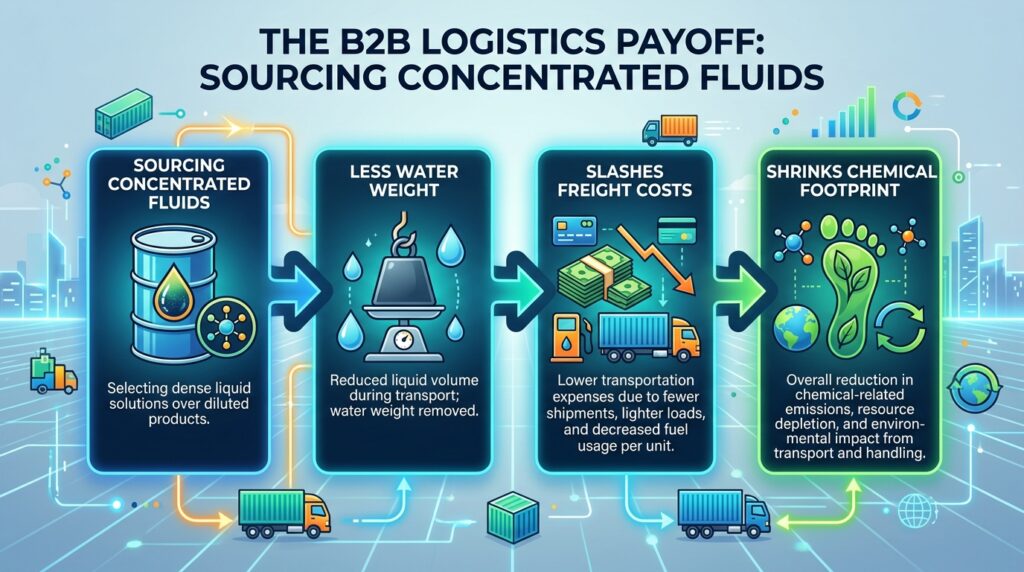
By switching to premium commercial grade dishwashing liquid features, facilities drastically reduce their overall chemical consumption rates. High-yield formulations slash freight, shipping, and storage overhead because your business stops paying to transport useless water weight across logistics corridors. Furthermore, lower product consumption minimizes plastic packaging waste and significantly reduces your monthly chemical purchasing frequency, locking in predictable operational margins.
Investing in Quality for Long-Term Business Growth
Understanding what makes quality dish soap worth the price comes down to chemistry and operational math. High active surfactant payloads, superior dilution stability, and skin-safe engineering ensure that a premium formula consistently outperforms cheap alternatives on every single business metric.
At Boxy Klin, we specialize in manufacturing high-concentration, private label cleaning products that balance exceptional grease-cutting power with commercial cost efficiency. To discuss your market’s specific chemical constraints, request a custom formulation, or obtain bulk wholesale pricing tiers for export, connect directly with our West Java facility at Boxy Klin.