
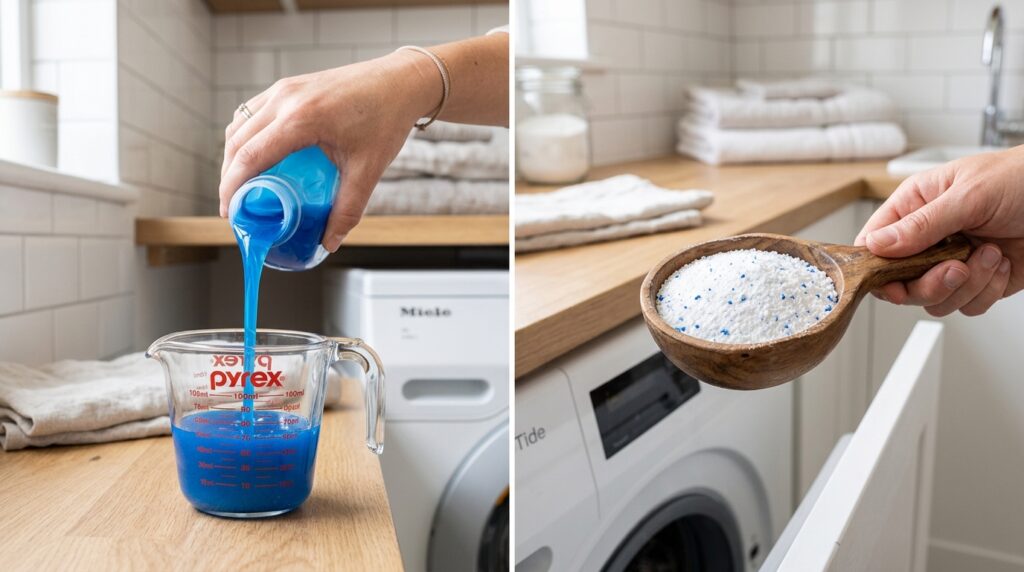
Walk into any high-volume industrial laundry facility, massive hotel housekeeping hub, or commercial textile processing plant, and you’ll find a constant operational debate happening in the chemical storage room: liquid or powder?
At first glance, it feels like a matter of personal preference, local tradition, or packaging style. But for bulk procurement managers, commercial buyers, and international distributors, choosing between these two formats impacts far more than just surface cleanliness.The format you choose directly influences your ocean freight overhead, warehouse shelf stability, commercial washing machinery lifespan, and total wash-cycle utility efficiency. Deciding liquid vs powder detergent which cleans better requires looking past consumer marketing and evaluating the raw chemistry behind the wash. Aligning your bulk inventory with the exact mechanical and water demands of your regional market starts with choosing a flexible chemical manufacturer; explore our adaptive production capabilities at Boxy Klin.
The Raw Power of Solids: Why Powder Dominates Heavy Organic Mud and Clay
To understand the enduring market share of solid detergents, we must look closely at the chemical compounds that thrive exclusively in dry, stable environments. Traditional powders provide an exceptional vehicle for highly stable, high-performance linear surfactants, most notably sodium linear alkylbenzene sulfonate.

In dry form, these active matter molecules can be blended with powerful alkaline builders without breaking down over long storage cycles. Consequently, powders naturally maintain higher alkalinity and pH levels in the wash water compared to standard liquids.
This elevated pH acts as a mechanical catalyst on organic threads; it aggressively swells textile fibers, loosening the grip of embedded particulate soils. This unique reaction makes powder the absolute best detergent for mud and clay, heavy-duty outdoor industrial workwear, and heavily soiled institutional linens.
Additionally, solid formulations boast incredible surfactant stability across years of storage. They are completely immune to the phase separation or temperature-induced thinning that can plague liquid stocks, making them an excellent choice for international importers handling long-distance ocean freight corridors.
A clear summary of the powder laundry detergent pros and cons reveals that while they offer unmatched raw power for heavy organic soils, they lack the immediate solubility needed for delicate or rapid cycles.
Instant Solubilization: Why Liquids Excel in Modern High-Velocity Systems
While powders dominate heavy mud, liquid formulations have seen an explosive surge in the commercial and retail sectors for a fundamentally different reason: fluid dynamics. Liquid detergents are already in a fully dissolved fluid state. The moment they are introduced into a commercial washer, they mix instantly with incoming wash water regardless of water temperature or cycle length.
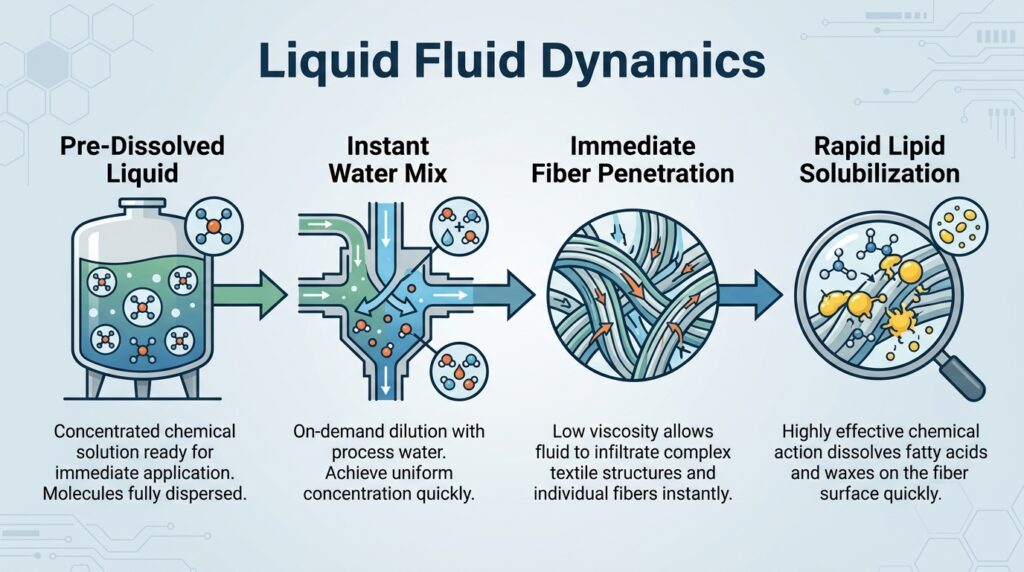
This instant blending makes a specialized liquid detergent for grease stains far superior in commercial laundries handling restaurant linens, oily kitchen uniforms, or modern synthetic fabrics. Because the surfactants are pre-dissolved, they do not waste valuable wash-cycle time turning a solid grain into a fluid solution. They penetrate oily fibers immediately, targeting food oils, body sebum, and petroleum grease at the molecular level before the rinse cycle begins.
When evaluating whether liquid or powder detergent is better for modern automated operations, liquids offer a seamless, clog-free liquid injection profile that powders simply cannot match.
Protecting the Machinery: How Formats Impact Commercial Equipment Longevity
For B2B procurement managers, evaluating a chemical’s true cost must include calculating the long-term maintenance overhead of the washing equipment itself. A major drawback in the powder laundry detergent pros and cons column is how solids behave in cold water or during short, high-efficiency wash cycles.

If the water chemistry, temperature, or cycle duration isn’t perfectly optimized, powders can leave a stubborn, undissolved residue inside commercial drainage systems, supply valves, and drainage pipes. Over time, this un-dissolved chemical paste mixes with fabric lint, forming a hard scaling that chokes plumbing lines and strains mechanical pumps.
For remote commercial facilities, eco-resorts, or operations relying on independent wastewater treatment, switching to a premium liquid eliminates this mechanical bottleneck completely. Fluids flow seamlessly through排水 lines, ensuring reliable septic system safety, preventing bacterial disruption in holding tanks, and drastically reducing quarterly plumbing maintenance overhead.To examine the complete technical data sheets, dissolution ratings, and machinery compatibility profiles for both our fluid and solid washing lines, browse our industrial portfolio at Boxy Klin.
The Sourcing Matrix: Matching Detergent Formats to Your Business Model
Deciding which liquid or powder detergent is better for your portfolio is not about finding a single universal winner; it is about analyzing your market’s specific economic constraints and commercial infrastructure.
| Detergent Format | Primary Soil Strengths | Logistics & Storage Profiles | Ideal Commercial End-User |
| Free-Flowing Powder | Heavy mud, clay, mineral dirt, industrial grime | High surfactant stability, long shelf life, heavy bulk weight | Mining camps, agricultural laundries, long-haul import networks |
| High-Active Liquid | Cooking oils, grease, body sebum, cosmetics | Instant low-temp dissolution, zero plumbing residues, requires robust packaging | Boutique hotels, commercial kitchen uniform laundries, automated retail lines |
Powders deliver a massive shelf life and allow for lower packaging material costs, but their high density makes them heavy and expensive to route across complex shipping networks.
On the other hand, liquids offer a premium retail appeal, support automated liquid-injection dispensing in modern commercial washers, and eliminate consumer complaints regarding powdery white stains on dark clothes. Utilizing these high concentration cleaning product advantages allows distributors to move away from low-margin commodity price wars and target premium commercial accounts.
Future-Proofing Your Detergent Inventory with Boxy Klin
When answering liquid vs powder detergent which cleans better, the technical truth lies entirely within your target market’s soil profile and machinery setups. Powders win the battle against heavy mud, clay, and industrial grime due to their high alkalinity and exceptional chemical stability. Liquids conquer grease stains, rapid wash cycles, cold water limits, and plumbing wear because they dissolve instantly and leave behind zero undissolved residue.
At Boxy Klin, we eliminate supply chain limitations by manufacturing world-class, commercial-grade laundry detergents in both high-active liquid and free-flowing powder formats. Whether you want to launch a highly competitive private label brand or source bulk industrial stocks for regional distribution, our West Java manufacturing facility can customize formulations to match your exact market needs.Connect with our international export team directly at Boxy Klin to secure custom pricing tiers and explore efficient freight options through Tanjung Priok Port.