

For decades, there was a running joke in the cleaning industry: if a freshly scrubbed room didn’t smell intensely of pungent chlorine bleach, artificial ammonia, or eye-watering fake pine, consumers didn’t believe it was actually clean. Heavy, industrial aromas were utilized as a psychological cue to prove that work had been done.
Today, that mindset is completely dead. Modern consumers, corporate office managers, and hospitality procurement teams are increasingly frustrated by pungent, suffocating spaces. When an indoor environment smells like a harsh chemical factory post-wash, it no longer signals cleanliness—instead, it triggers instant brand complaints, respiratory discomfort, and customer dissatisfaction.
For wholesale distributors and retail category buyers, understanding why does my house smell too strong after cleaning is essential for staying ahead of consumer trends. Shifting your commercial product line away from overpowering industrial odors toward sophisticated, modern scent profiles begins at the manufacturing source; learn about our innovative approach to formulation at Boxy Klin.
Behind the Pungency: The Airborne Vaporization Process
To solve the issue of a suffocating post-wash environment, we must examine the physical process of chemical evaporation. What a person experiences as an overwhelming aroma isn’t actually “freshness”—it is the rapid vaporization of airborne chemicals into an enclosed space.
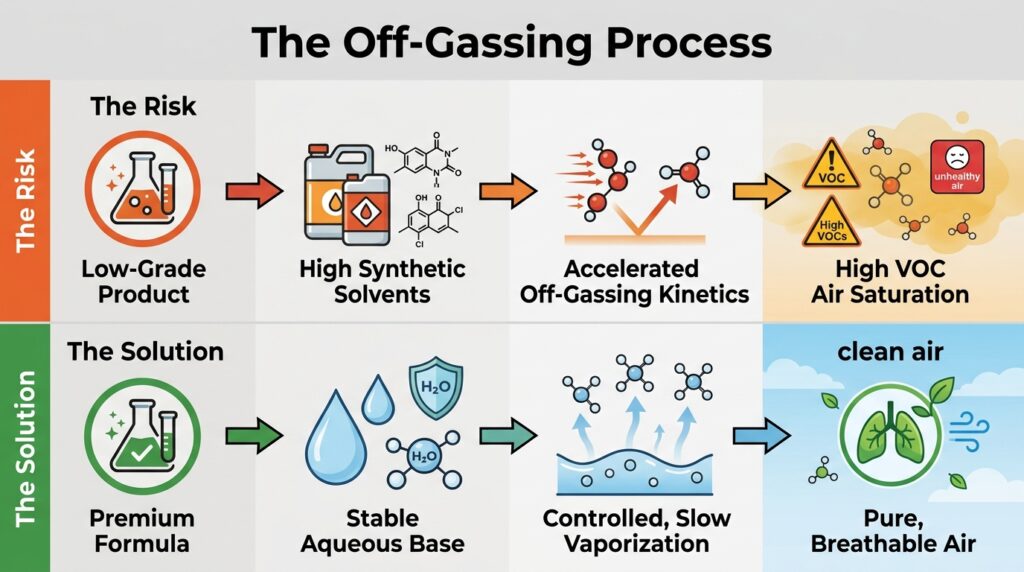
Bargain-tier cleaning products frequently utilize aggressive chemical carriers and synthetic masking solvents to thin out thick soap concentrates or keep low-grade ingredients from separating in the bottle. When these fluids hit a surface, they trigger accelerated chemical off-gassing kinetics.
The carrier liquids flash off rapidly, filling the room with high concentrations of Volatile Organic Compounds (VOCs). These airborne vapors saturate the ambient air quickly, trapping heavy, throat-irritating chemical compounds within walls and causing building occupants to wonder why the air feels so heavy and hard to breathe.
The Masking Trap: Why Cheap Soaps Use Overpowering Scents
A common formulation shortcut among low-tier chemical manufacturers is relying heavily on fragrance overload to mask low-grade raw materials. When raw surfactant bases carry an unpleasant, industrial petroleum odor, manufacturers compensate by dumping massive volumes of inexpensive synthetic perfumes into the batch.
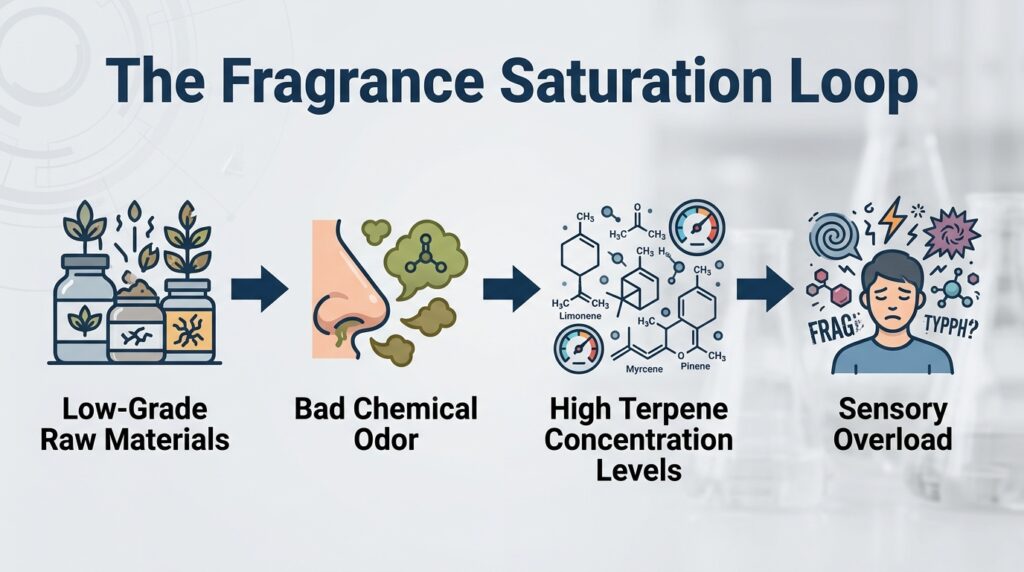
These cheap additives often feature sky-high terpene concentration levels—the chemical components responsible for creating sharp, aggressive citrus, pine, or floral notes. While these terpenes successfully hide the foul smell of sub-par active ingredients in the bucket, they behave aggressively once spread over large surface areas like floors or countertops. Rather than neutralizing strong cleaning smells, these heavy masking chemicals overload human senses, triggering headaches, watery eyes, and long-term nasal discomfort for cleaning crews and tenants alike.
Workplace Wellness: Managing Olfactory Tolerances in Shared Spaces
For B2B procurement officers, hotel category buyers, and facility managers, the downstream impact of product fragrance levels directly affects operational productivity and customer satisfaction scores.
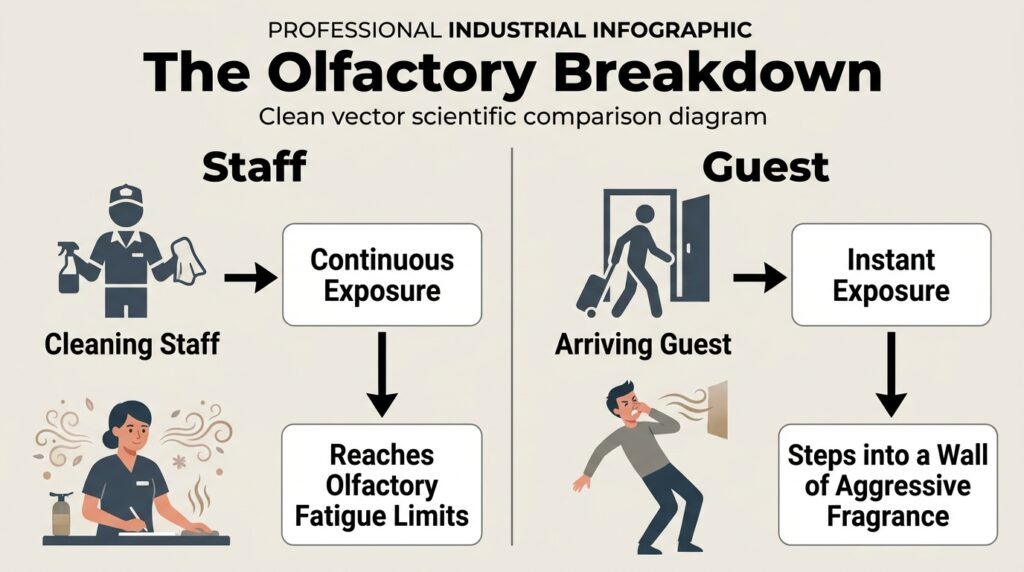
When janitorial teams work with high-VOC, intensely perfumed liquids shift after shift, they rapidly reach their internal olfactory fatigue limits. Because their nasal receptors become temporarily numbed to the fragrance notes, staff members will routinely over-pour or fail to realize just how suffocating the air quality has become.
However, arriving office employees, commercial tenants, or hotel guests step into a wall of aggressive fragrance with zero sensory preparation. Stocking low odor commercial cleaning products protects shared environments from occupant discomfort, ensuring a neutral, premium, and truly clean sensory experience. To view our laboratory safety documentation, VOC compliance data, and delicate fragrance options available for our wholesale product line, browse our selection at Boxy Klin.
Sourcing the Next Generation of Household Cleaners
For international importers, commercial wholesalers, and retail distributors, the future of product shelf velocity is heavily weighted toward gentle, nose-friendly formulations. Moving your product catalog toward subtle fragrance home cleaners is a highly lucrative portfolio upgrade.

By stocking premium cleaning fluids that utilize high-purity raw active matter, you eliminate the need for heavy synthetic masks entirely. These advanced formulas require only trace-level, elegant aromatics to leave behind a clean atmosphere. This makes them highly attractive to lucrative premium market segments, including:
- Luxury boutique hotels and premium eco-resorts.
- High-end residential maid and commercial cleaning services.
- Families and individuals managing asthma, respiratory conditions, or chemical hypersensitivities.
Partnering with Boxy Klin for Modern Air Quality Standards
If a home, retail space, or commercial property smells intensely pungent after a routine wash, it is a direct symptom of high chemical off-gassing, excessive solvent use, or cheap raw material masks. True cleanliness shouldn’t assault the senses; it should leave an indoor environment feeling neutral, light, perfectly balanced, and completely breathable.
At Boxy Klin, we develop modern, high-efficiency private label cleaners that maximize surface grease and grime removal while strictly suppressing harmful airborne irritants and overpowering scents. To expand your B2B inventory with our premium, low-odor commercial cleaning products or to develop a customized, lightly fragranced signature line for your target market, connect with our West Java export team directly at Boxy Klin.