
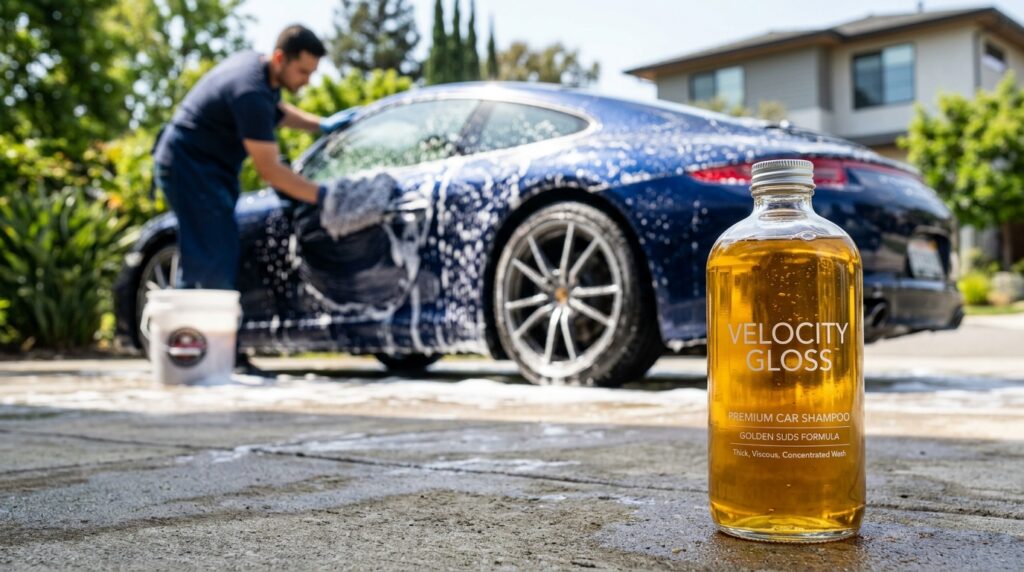
Walk down any chemical aisle or open any wholesale sourcing catalog, and you will find dozens of car wash options all claiming to be the “ultimate shine booster” or the “ultimate suds formula.” But for an importer, distributor, or retail procurement manager, you cannot afford to rely on flashy label designs or vague marketing claims. You need to know exactly what is inside the bottle.
In the high-volume B2B space, a great automotive chemical line isn’t just about big bubbles. It is about paint safety, consistent repeat orders, and bottom-line profitability.
To help you vet your next supplier or refine your manufacturing specifications, let’s break down the technical engineering and quality car shampoo indicators that separate professional-grade formulations from cheap, watery alternatives.
The Safety Standard: Why Balance Matters Most
Before looking at how a product smells or foams, a commercial buyer must evaluate its chemical baseline. The absolute core requirement of a premium automotive cleaner is its ability to lift road grime without stripping away existing surface protection, such as carnauba waxes, synthetic polymer sealants, or ceramic coatings.
This is where a ph neutral car wash soap guide becomes essential for your quality control team.
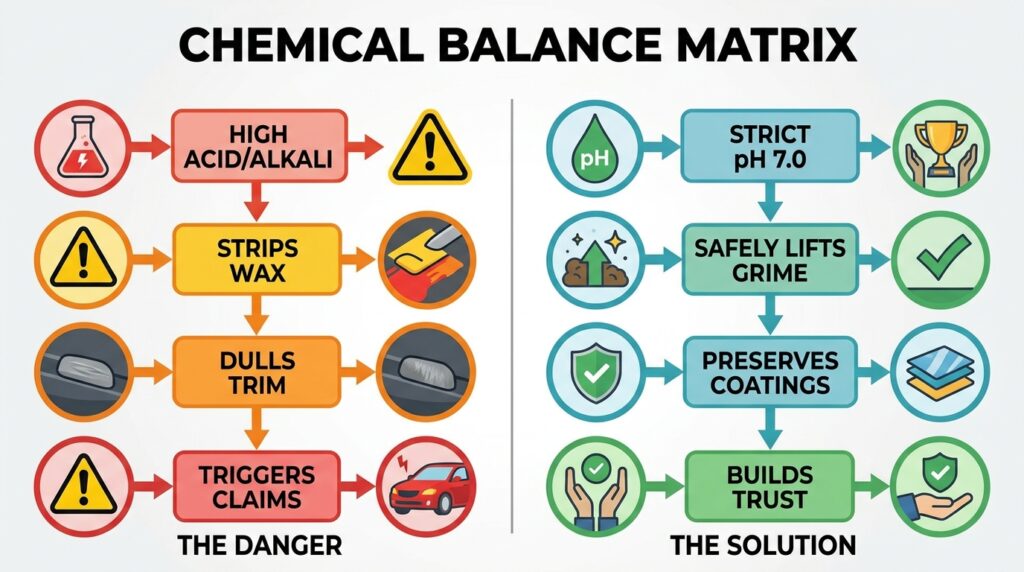
A truly professional formula maintains a strict, balanced pH of 7.0. Achieving this requires a precise surfactant concentration—blending mild, high-tier surface-active agents that chemically target road film while remaining completely inert against protective coatings. Stocking a product that leans too acidic or too alkaline will eventually lead to hazy clear coats, faded rubber trim, and costly customer complaints.
Slickness and Lubricity: The Real Secret to Safe Washing
If you ask a professional automotive detailer what they look for when testing a new brand, they won’t talk about the bubbles. They will talk about “slickness.”
One of the best car wash soap features you can verify during product testing is its tactile lubrication. When a wash mitt glides over a vehicle’s panels, the soap must act as a microscopic, ultra-slick barrier.
High lubricity and slickness prevent sharp, abrasive dirt particles—like sand, brake dust, and road grit—from grinding directly against the clear coat. Instead, the mitt floats smoothly over the debris. If a formula lacks this essential glide-agent technology, the friction will create thousands of tiny microscopic swirl marks, permanently dulling the vehicle’s finish and ruining your brand’s reputation for quality.
More Than Just Visuals: The Role of Foam Stability
It is no secret that end-users and detailing shops love thick, shaving-cream-like foam. While dense suds have a major psychological appeal on social media and retail shelves, they also serve a vital mechanical purpose in what makes a good car shampoo.

True foam stability means the bubbles do not collapse immediately upon touching the warm metal panels of a vehicle. A stable, dense foam blanket physically clings to vertical surfaces, giving the surfactants the necessary time to encapsulate and loosen stubborn road film before the wash mitt even touches the paint. If the foam breaks down too quickly, the liquid dries out rapidly, leaving behind difficult-to-rinse soap scum and unsightly water spots.
The B2B Bottom Line: Rinsing Speed and Dilution Math
For procurement managers and business owners, the ultimate test of an automotive chemical is its economic efficiency. When calculating how to choose car wash soap for large-scale distribution or fleet use, you have to look at the total cost-per-wash, not just the upfront gallon price.
Dilution Ratio Efficiency
Low-quality, bargain-tier car soaps are heavily watered down at the factory to hit a cheap price point. This means the end-user has to pour half a bottle into a bucket just to get decent cleaning action.
In contrast, a premium, highly concentrated formulation features an aggressive dilution ratio efficiency (often 1:400 or higher). For a B2B importer, importing highly concentrated liquids means you are not paying to ship bulk water across continents; you are shipping pure, high-margin active chemistry that your clients can dilute as needed.
Free-Rinsing Agents
Time is money in commercial detail shops and high-volume car washes. A premium shampoo is engineered with specialized free-rinsing agents. These polymers alter the surface tension of the rinse water, causing it to sheet off the vehicle rapidly in large sheets rather than breaking into individual droplets.
This clean sheet rinsing minimizes drying time, drastically reduces the risk of water spotting, and ensures zero filmy surfactant residue is left behind on the clear coat or windows.
Elevating Your Car Care Product Line
When you are sourcing automotive chemicals in bulk or building a private label brand, success comes down to objective metrics. A truly superior car shampoo is defined by a precise chemical matrix: a safe, pH-neutral balance, heavy lubrication to prevent swirl marks, long-lasting foam stability, and an efficient concentration level that protects your shipping margins.
By insisting on these technical benchmarks during your procurement process, you ensure that your product line delivers real, professional-grade value—keeping your retail clients and commercial distributors coming back batch after batch.
Ready to Optimize Your Automotive Sourcing? Don’t gamble your brand’s reputation on unverified, watery formulations. Secure a highly concentrated, pH-neutral car shampoo engineered to meet strict international performance standards. Contact our private label procurement team today to request technical data sheets, review custom dilution ratios, and order your sample kits.